Posted: 02/01/2005
Discussion Board on this Photo
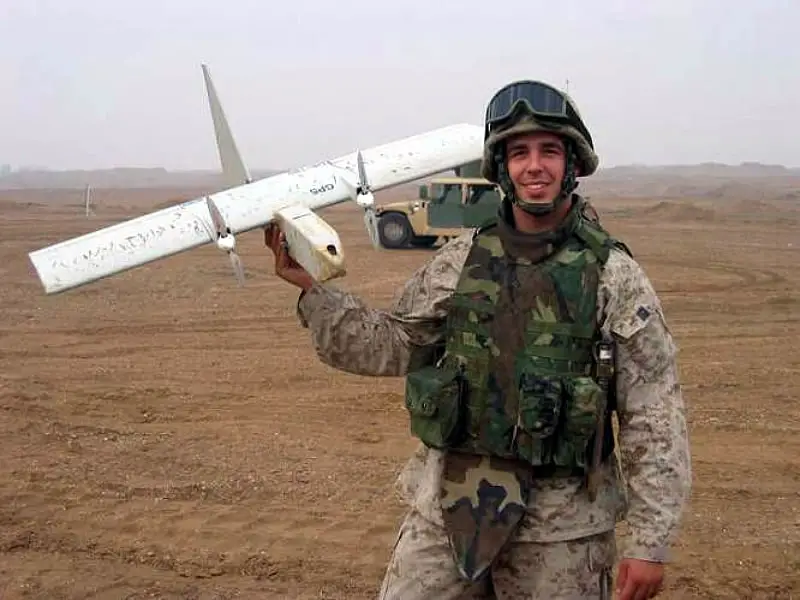
The following are photos of the Dragon Eye UAV system at work in Fallujah.
Photos by LTC Norm Root
The U.S. Marine Corps is returning to Iraq with as manyDragon Eye mini-UAVs as they can get their hands on. The five pound aircraft islaunched with a large rubber band and transmits pictures back to a laptopcomputer, which also contains the softwarethat controls the aircraft. With a 45 inch wingspan, the battery powered DragonEye can stay in the air for about an hour and can fly up to ten kilometers fromthe operator. Only one Dragon Eye went to Iraq last year, and it was out ofaction after a week when the laptop that controlled it broke. But for that oneweek, the Dragon Eye performed well, and continued to do so when the marinesreturned to the United States. The Dragon Eye has proved very useful intraining, and the marines are trying to get as many as 180 of the small UAVs forthe units returning to Iraq this year. Eventually, the marines plan to buy 1,026of the aircraft and 342 ground control units. The Dragon Eye uses many of thesame components as the Air Force Desert Hawk mini-UAV. That means that theoperator doesn't have to "fly" the UAV, just indicate on the laptop screen whatroute it should take, and use a mouse click to show it where it should justcircle. Each $100,000 Dragon Eye unit has three aircraft, a ground controlstation (radio transmitter/receiver, laptop) and maintenance equipment. Theaircraft is very popular with company commanders, who can quickly send a DragonEye up to check out an area before they enter it, and keep an eye on surroundingareas during operations.
More Photos
1 |
2 |
3 |
4 |
5 |
6 |
7
