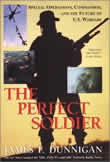
The Perfect Soldier: Special Operations, Commandos, and the Future of Us Warfare by James F. Dunnigan

More Books by James Dunnigan

Dirty Little Secrets

DLS for 2001 | DLS for 2002 | DLS for 2003
DLS for 2004 | DLS for 2005 | DLS for 2006
DLS for 2007 | DLS for 2008


No Pundit Ever Survives Contact with a Historian


by James Dunnigan

The war in Afghanistan has brought forth the usual gaggle of pundits explaining it all for you. The most popular editorial hook is that this war marks the beginning of a new age in warfare. This, of course, is because of the new weapons and strategies used in Afghanistan. The new items most frequently touted are:

  1. Small numbers of Special Forces troops organizing the locals into an army and calling in air strikes to give their local lads an edge.
  2. The use of UAVs to monitor the battlefield, or even carry weapons.
  3. The widespread use of smart bombs, especially ones that could be dropped in all weather.

Aside from the fact that all of the above technologies were first used 60 years ago during World War II, there have been more recent instances when the same weapons and techniques were put to work.

During the Vietnam War, U.S. Army Special Forces used the same techniques they applied in Afghanistan. It was in Vietnam that the Special Forces actually developed the tactics that worked so well in Afghanistan. The Vietnam experience was even more dramatic. For most of the 1960s SOG (Studies and Observation Group) Special Forces LRRPs (Long-Range Reconnaissance Patrols) operated in Laos. The Special Forces (and CIA) had organized a 10,000-man army from among the local Hmong tribes in Laos. The LRRPs went in (about 23,000 times) to find North Vietnamese troops and installations, whereupon devastating air strikes were called in. Another 50,000 tribesmen in the central highlands of Vietnam were organized into military units.

Some of these fought in Laos as well. However, the North Vietnamese (and Laotian communist Pathet Lao) troops were more numerous and determined than the Taliban, so the "American Tactics" didn't work out as well in Laos. The technique did work better in Vietnam. The North Vietnamese were not able to capture the Central Highlands until the Special Forces and American air power left. And, OK, they didn't have as many smart bombs in the 1960s, but they didn't need them to do the deed.

UAVs got their first big workout during World War II (the German V-1 "Buzz Bomb"). But it was the Israelis that began using TV-equipped UAVs in combat during the 1980s. It's taken the U.S. nearly two decades to get with the program. Why the U.S. has taken so long to catch up is another story.

Smart bombs carried by heavy bombers dominating a battle? That began back in 1943 when a German bomber using radio-controlled bombs sank an Italian warship. The U.S. also had a smart bomb development program going on, and these were used heavily (several hundred dropped) in the Pacific during 1945. There were many cases of "one bridge, one bomb." We put all that stuff into storage in 1945 (although the Navy kept working on anti-ship models). A lot of the reluctance to aggressively pursue smart bomb technology came from the pervasive theory that nuclear weapons made conventional bombs redundant. Korea created doubts about that, and when Vietnam came along, smart bombs again became a popular weapon.

All-weather bombing also is a World War II development, largely through the use of ground-mapping radar. OK, it wasn't as accurate as GPS-guided bombs, but you could see where the trend was going. The basic problem is that we have not had many wars where the Special Forces can do their thing with local forces and calling in air strikes. But give the generals some credit, the Special Forces got its budget (and status) increased during the 1990s while everyone else was being cut. Someone in the Pentagon had a sense of history and could tell which way the winds of war were blowing.

Military technology doesn't pop out of nowhere. It develops slowly, but out of sight as far as most civilians are concerned. So pay closer attention and you won't be as surprised next time.

It's a case of deja vu all over again.

Norwich University

US Cavalry
Visit StrategyPage's US Cavalry Store


New Strategy - Wargames at Discount Prices
1.Modern Air Power: War Over the Middle East
2.Commander: Napoleon at War
3.Close Combat: Watch am Rhein
4.Gallic Wars
5.Fast Action Battle: The Bulge

100+ Computer and Board games all with free shipping.


© 1998 - 2009 StrategyWorld.com. All rights Reserved.
StrategyWorld.com, StrategyPage.com, FYEO, For Your Eyes Only and Al Nofi's CIC are all trademarks of StrategyWorld.com
Privacy Policy

LOGINCLOSE
THE STRATEGYPAGE HOLIDAY LIMITED TIME SPECIAL

Until the end of December when you subscribe to our newsletter you’ll get an additional 6 months for free. Pay for 12 months but get 18.

On top of that you’ll get the following:

  • Austin Bay’s “Embrace the Suck!” a printed pamphlet
  • An electronic copy of the book Warfighting: The United States Marine Corps
  • An electronic copy of the Army’s Counterinsurgency Manual

All of the above and 18 months of StrategyPage.com for just $27. Subscribe Today.

As a subscriber you get:

  • Our daily news in your inbox each morning
  • Access to our exclusive discussion forum
  • Access to the site AD FREE with no annoying ads or pop-ups
Subscribe Now!