Posted: 11/01/2006
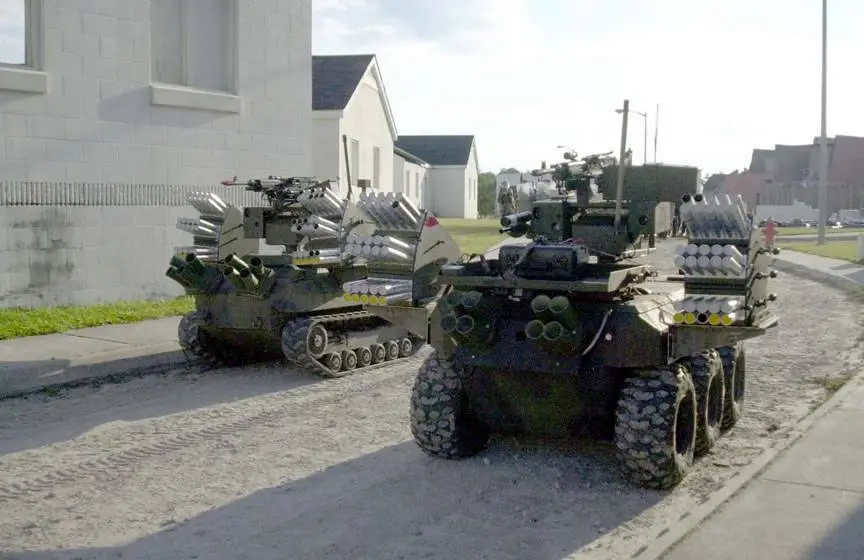
The Marine Corps is engaged in an acquisition program todevelop a Tactical Unmanned Ground Vehicle in order toprovide the Marine Air-Ground Task Force (MAGTF)with a tele-operated/semi-autonomous ground vehicle forremoting combat tasks in order to reduce risk to Marinesand neutralize threats. The Gladiator is designedprincipally to support dismounted infantry during theperformance of their mission, across the spectrum ofconflict and range of military operations. The primaryfunction of the Gladiator will be to provide the GroundCombat Element (GCE) with unmanned scouting andreconnaissance, surveillance, and target acquisition(RSTA). Operating forward of GCE units, the Gladiatorwill perform scouting and reconnaissance tasks whilepermitting the operator to remain covered and concealedsome distance away. Additional functions of theGladiator system will be to utilize a modular configurationcapable of employing the Anti-Personnel/ObstacleBreaching System (APOBS), M240G/M249 MachineGuns, and currently fielded chemical detection systems.With the development of future Mission Payload Modules(MPM), projected operational capabilities include:obscurant delivery; direct fire (lethal and non-lethal);communications relay; tactical deception (electronic andacoustic); combat resupply; casualty evacuation, orcounter sniper employment. These modules will allowcommanders to increase their operational capability bytailoring the capabilities of the Gladiator to best meet theirmission requirements.
