Billions of dollars are being thrown at the IED (roadside bomb) problem in Iraq.
Posted: 09/01/2005
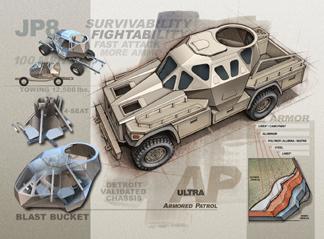
This means that a lot of ideas that would, in normal times, never get money, nowdo. Some are strange, and useless, and diligent muckrakers will eventually getto them. But some are pretty interesting, and potentially useful. One of them isthe ULTRA AP, a heavily modified Ford F-350 pickup. The 350 (and its cousin, the250) are favorites with police and armed forces in many nations. The Afghan armyrecently bought 5,000 modified (for harsh cross country terrain) F-350s fortheir army. The ULTRA AP (for Armored Patrol) was designed to reflect some ofthe ideas coming out of Iraq, on how to design a more effective �armored truck�for combat patrols in an area where you are likely to encounter mines, roadsidebombs and ambushes. The F-350 was selected because it is a mature, proven designthat provides a good starting point. The Office of Naval Research (which doesstuff for the marines), turned the Georgia Tech Research Institute (which does alot of defense work, and is considered the �MIT of the South�) loose on theproject.
The first mod was the use the light-weight armor that was beingused by military trucks in Iraq. This included bullet and blast proof glass. Thenext mod was more interesting, and based on suggestions from the troops. Theseating was changed from four people sitting two by two, to a diamond, one bytwo by one, arrangement. This meant replacing the current body of the 350 with anew one that made the ULTRA AP look more like an armored car. But this did twoimportant things. It got the passengers farther away from the wheels, which arethe things that go over mines and take much of the blast. Second, it put thefour passengers in positions troops consider more useful. The driver is infront, taking care of driving. The two passengers behind the driver face theleft and right. The fourth passenger faces the rear. This way, the passengersare always giving the vehicle a view of potential threats coming from anydirection. The passenger compartment is actually a �blast bucket,� with armorbeneath the passengers that deflects much of the blast away. The designers alsotook advantage of the computer networks that are now standard in motor vehicles,and provided the driver with more control over maneuvering the vehicle on roads,and cross country.
The Office of Naval Research will test the ULTRA AP tosee if the design concepts are worth incorporating into future militaryvehicles. Some more may be built so that they can be tested with mines androadside bombs as well.
Billions of dollars are being thrown at the IED(roadside bomb) problem in Iraq. This means that a lot of ideas that would, innormal times, never get money, now do. Some are strange, and useless, anddiligent muckrakers will eventually get to them. But some are prettyinteresting, and potentially useful. One of them is the ULTRA AP, a heavilymodified Ford F-350 pickup. The 350 (and its cousin, the 250) are favorites withpolice and armed forces in many nations. The Afghan army recently bought 5,000modified (for harsh cross country terrain) F-350s for their army. The ULTRA AP(for Armored Patrol) was designed to reflect some of the ideas coming out ofIraq, on how to design a more effective �armored truck� for combat patrols in anarea where you are likely to encounter mines, roadside bombs and ambushes. TheF-350 was selected because it is a mature, proven design that provides a goodstarting point. The Office of Naval Research (which does stuff for the marines),turned the Georgia Tech Research Institute (which does a lot of defense work,and is considered the �MIT of the South�) loose on the project.
The firstmod was the use the light-weight armor that was being used by military trucks inIraq. This included bullet and blast proof glass. The next mod was moreinteresting, and based on suggestions from the troops. The seating was changedfrom four people sitting two by two, to a diamond, one by two by one,arrangement. This meant replacing the current body of the 350 with a new onethat made the ULTRA AP look more like an armored car. But this did two importantthings. It got the passengers farther away from the wheels, which are the thingsthat go over mines and take much of the blast. Second, it put the fourpassengers in positions troops consider more useful. The driver is in front,taking care of driving. The two passengers behind the driver face the left andright. The fourth passenger faces the rear. This way, the passengers are alwaysgiving the vehicle a view of potential threats coming from any direction. Thepassenger compartment is actually a �blast bucket,� with armor beneath thepassengers that deflects much of the blast away. The designers also tookadvantage of the computer networks that are now standard in motor vehicles, andprovided the driver with more control over maneuvering the vehicle on roads, andcross country.
The Office of Naval Research will test the ULTRA AP to seeif the design concepts are worth incorporating into future military vehicles.Some more may be built so that they can be tested with mines and roadside bombsas well.
